


2026 Chevy Trax Gas Mileage: MPG by Trim Level
Every 2026 Chevy Trax returns an EPA-estimated 28 mpg city, 32 mpg highway, and 30 mpg combined. That figure does not change from one trim to the next. The base LS, the sport-styled 1RS and 2RS, the tech-forward LT, and the rugged-look ACTIV all post identical numbers. Chevrolet builds every Trax around the same turbocharged engine and front-wheel-drive layout.
For daily driving around Dallas, that consistency is the point. You do not have to move up the lineup or add an option package to get the best fuel economy the Trax offers. The most efficient powertrain is the only powertrain. It comes standard on every model.
EPA-estimated fuel economy figures are for comparison purposes only. Your actual mileage will vary depending on driving conditions, how you drive and maintain your vehicle, battery age/condition, and other factors.
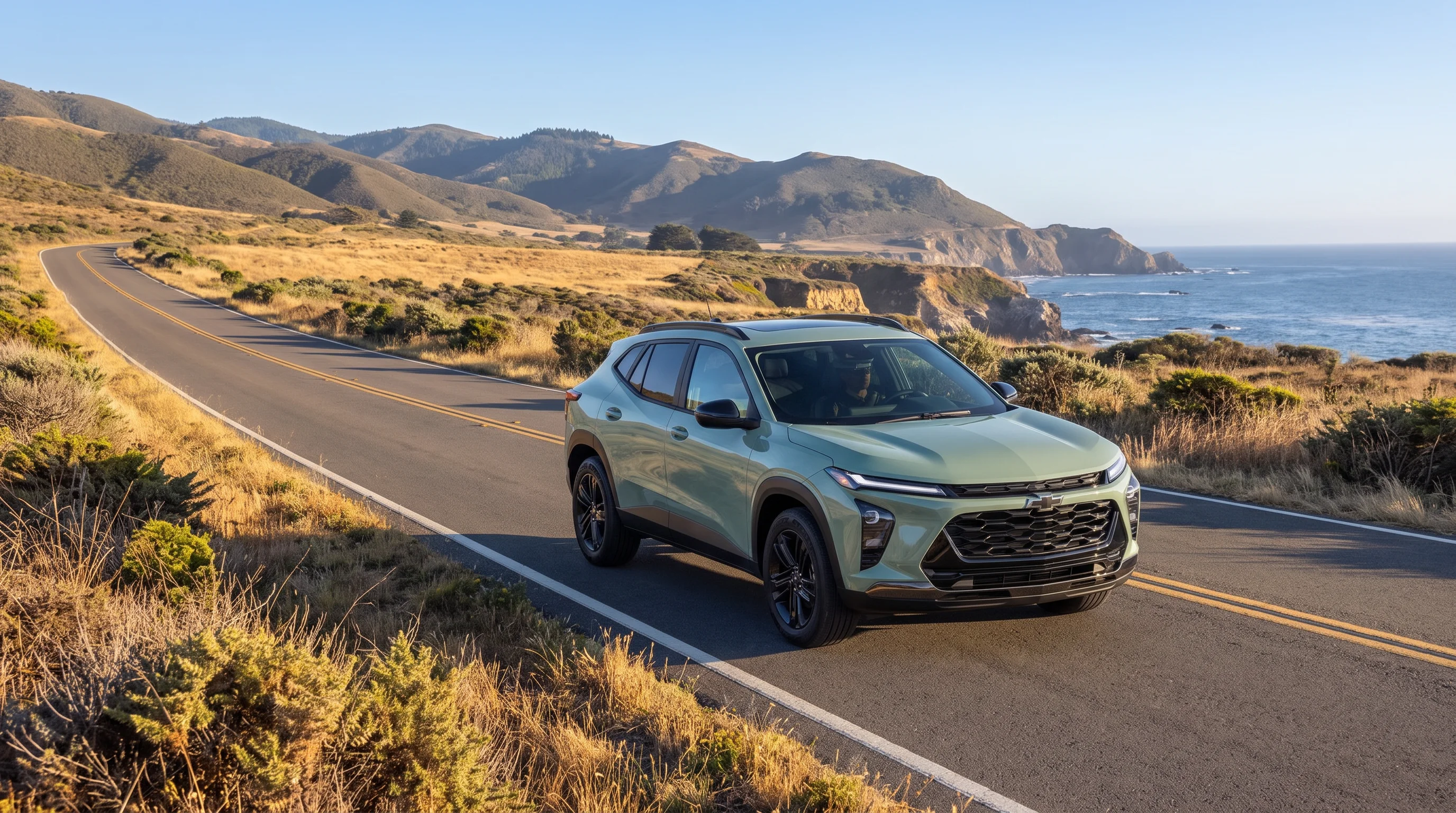
What Is the Gas Mileage of the 2026 Chevy Trax Across Trim Levels?
All five 2026 Trax trims carry the same EPA-estimated 28 mpg city, 32 mpg highway, and 30 mpg combined rating. There is no drivetrain choice to weigh and no engine upgrade to consider. Choosing between trims comes down to interior tech, comfort features, and exterior styling, not what you will spend at the pump. Ratings are published by the EPA at fueleconomy.gov and confirmed on the Chevrolet Trax model page.
2026 Chevy Trax EPA-Estimated MPG by Trim
Because every trim shares the same mechanical core, the numbers below repeat by design. That repetition is the answer to the question most Trax shoppers are actually asking.
| Trim | EPA-Estimated City | EPA-Estimated Highway | EPA-Estimated Combined |
|---|---|---|---|
| LS | 28 mpg | 32 mpg | 30 mpg |
| 1RS | 28 mpg | 32 mpg | 30 mpg |
| LT | 28 mpg | 32 mpg | 30 mpg |
| 2RS | 28 mpg | 32 mpg | 30 mpg |
| ACTIV | 28 mpg | 32 mpg | 30 mpg |
EPA-estimated fuel economy figures are for comparison purposes only. Your actual mileage will vary depending on driving conditions, how you drive and maintain your vehicle, battery age/condition, and other factors.
Fuel Tank and Fuel Type
The Trax holds 13.2 gallons and runs on regular unleaded. The engine is also flex-fuel capable, so it will accept E85. How far a tank carries you depends on your mix of city and highway driving, since the two ratings differ by four mpg.
| Specification | 2026 Chevy Trax |
|---|---|
| Fuel Tank Capacity | 13.2 gallons |
| Recommended Fuel | Regular unleaded, 87 octane minimum |
| Flex-Fuel Capability | E85 compatible |
How Many Horsepower Does the 2026 Chevy Trax Engine Generate?
The 2026 Chevy Trax makes 137 horsepower at 5,000 rpm and 162 lb-ft of torque from a 1.2L ECOTEC turbocharged three-cylinder engine, paired with a six-speed automatic transmission and front-wheel drive.
2026 Chevy Trax Powertrain Specifications
| Specification | 2026 Chevy Trax |
|---|---|
| Engine | 1.2L ECOTEC Turbocharged 3-Cylinder |
| Horsepower | 137 hp at 5,000 rpm |
| Torque | 162 lb-ft |
| Transmission | 6-Speed Automatic |
| Drivetrain | Front-Wheel Drive (no all-wheel drive offered) |
The number reads modest on paper. From the driver’s seat, the turbocharger changes how that output feels. Forced induction brings the full 162 lb-ft on stream low in the rev range. Merging onto the freeway, changing lanes, and pulling into moving traffic all feel prompt rather than strained.
Much of the subcompact crossover class has moved to continuously variable transmissions. Chevrolet stayed with a conventional six-speed automatic. It shifts through defined gears instead of holding the engine at high rpm under load. The result is a quieter, more predictable drive at highway speed, with no loss of efficiency.
Is Front-Wheel Drive the Right Setup for Dallas Driving?
Front-wheel drive is standard on every 2026 Trax. All-wheel drive is not offered at any trim level. That single decision is a large part of why the Trax posts the fuel economy it does. Leaving out a transfer case, a driveshaft, and a rear differential removes weight and driveline friction. Every pound and every point of drag the engine skips is fuel it does not burn.
Galleria Chevrolet sits on the I-635 service road in Far North Dallas. The commute most of our customers describe is a mix of freeway running on 635 and stop-and-go surface streets. Front-wheel drive handles that pattern well. Traction control and electronic stability control manage wheel slip when a Dallas storm turns the pavement slick.
Shoppers on our floor regularly ask whether the sport appearance trims give up any efficiency for the way they look. They do not. The mechanicals underneath are identical across the lineup. That is why the ratings are identical too. For a fuller walk through the lineup, see our 2026 Chevy Trax overview.
Do Higher 2026 Chevy Trax Trims Cost More to Drive?
No. Every trim uses the same engine, the same transmission, and the same drivetrain. Fuel consumption is the same whether you buy the entry LS or the top of the range. Whatever separates the trims, it is not what you spend on gas.
What the higher trims add is equipment. Moving up to the LT brings an 11-inch diagonal color touchscreen, an 8-inch diagonal color Driver Information Center, automatic climate controls, and a remote vehicle starter system. Those are convenience and technology upgrades, not powertrain changes. None of them alters the EPA rating. For a trim-by-trim breakdown, see our full 2026 Trax trims and pricing guide.
How Do You Measure Real-World Fuel Economy?
The most reliable way to know what your Trax actually returns is to work it out by hand across three consecutive fill-ups. The driver information display gives you a quick running estimate. Doing the math yourself removes any digital averaging. It also shows you exactly how your own route affects your mileage.
- Fill the tank completely. Run the pump until the nozzle clicks off on its own, then reset the trip odometer to zero.
- Drive normally. Keep to your usual week. No special routes, no unusually gentle driving.
- Record the numbers. At the next fill-up, note the trip odometer reading and the exact gallons pumped.
- Do the math. Divide miles driven by gallons used. Miles divided by gallons equals your real-world mpg.
Repeat that across three tanks and you will have a number you can trust. Expect some variation. Drivers making short, frequent trips through University Park will see city figures land lower than drivers holding a steady speed on the freeway. Hard acceleration and long idling with the air conditioning running will both pull results below the EPA estimate.
How to Get the Most Out of Every Gallon
A few habits go a long way toward closing the gap between your real-world number and the EPA rating.
- Drive smoothly. Gradual starts and gentle braking beat quick launches and hard stops.
- Use cruise control. A steady speed on the highway is more efficient than constant small corrections.
- Limit excess weight. Cargo you are not using is cargo the engine is working to move.
- Keep tires properly inflated. Check them against the pressure listed on the driver’s door jamb; underinflated tires create rolling resistance that costs you mileage.
- Stay current on maintenance. Regular oil changes, a clean engine air filter, and routine engine checks keep the Trax running the way it was rated to run.
Common Questions About 2026 Chevy Trax MPG and Performance
Does the 2026 Chevy Trax require premium gasoline to get top fuel economy?
No. The 2026 Chevy Trax is designed to run on regular unleaded gasoline with a minimum of 87 octane, and the engine is also flex-fuel capable for E85. Higher-octane premium fuel will not add horsepower, sharpen acceleration, or raise your fuel economy figures. Regular-grade fuel keeps your cost per mile as low as possible.
How far can the 2026 Chevy Trax drive on a single tank of gas?
The Trax holds 13.2 gallons of fuel. How far that carries you depends on your mix of city and highway driving, since the EPA-estimated city and highway ratings differ by four mpg. Rather than work from an average, track your own mileage across a few tanks using the method above and you will know your real number.
Does highway speed affect the Trax’s gas mileage?
Yes. Aerodynamic drag rises sharply with speed, so sustained high-speed cruising uses more fuel than the moderate speeds EPA testing simulates to produce the 32 mpg highway figure. Holding a steady speed with cruise control is one of the simplest ways to protect your highway mileage on open Texas roads.
EPA-estimated fuel economy figures are for comparison purposes only. Your actual mileage will vary depending on driving conditions, how you drive and maintain your vehicle, battery age/condition, and other factors.
What maintenance keeps the Trax engine running efficiently?
Keep the tires inflated to the pressure printed on the driver’s door jamb, replace the engine air filter at the factory-recommended interval, and use fresh oil at the correct viscosity. Those three items do more for sustained fuel economy than anything else in the maintenance schedule.
What driver-assist technology in the Trax helps with fuel economy?
Chevy Safety Assist comes standard on every 2026 Trax and covers six features: Automatic Emergency Braking, Front Pedestrian Braking, Forward Collision Alert, Lane Keep Assist with Lane Departure Warning, Following Distance Indicator, and IntelliBeam High Beam Assist. Adaptive Cruise Control is a separate available feature rather than part of that suite. Where it is equipped, it manages throttle smoothly in highway traffic, and avoiding sharp acceleration and heavy braking helps keep consumption steady.
Driver-assistance and advanced safety systems are supplemental aids and are not substitutes for safe and attentive driving. Availability, operation, and effectiveness vary by trim and equipment and depend on factors including road, weather, traffic, and vehicle condition. Always keep your hands on the wheel and your eyes on the road. See your owner’s manual for system limitations and details.
See the 2026 Chevy Trax at Galleria Chevrolet
The 2026 Chevy Trax makes a simple case. It returns an EPA-estimated 30 mpg combined from a 1.2L turbocharged engine producing 137 horsepower. The fuel economy is the same no matter which of the five trims you choose. For Dallas drivers weighing running costs first, that removes a decision instead of adding one.
Our team can walk you through the differences between the LS, 1RS, LT, 2RS, and ACTIV. Come see the 2026 Trax in person and take it out on 635.
Disclaimers
EPA-estimated fuel economy figures are for comparison purposes only. Your actual mileage will vary depending on driving conditions, how you drive and maintain your vehicle, battery age/condition, and other factors.
Driver-assistance and advanced safety systems are supplemental aids and are not substitutes for safe and attentive driving. Availability, operation, and effectiveness vary by trim and equipment and depend on factors including road, weather, traffic, and vehicle condition. Always keep your hands on the wheel and your eyes on the road. See your owner’s manual for system limitations and details.
