

Certified Oil Change Service near Addison, TX
Modern engines depend on precise lubrication to manage heat and reduce friction, and a certified synthetic oil change is built around strict technical standards. For drivers in Addison and across Far North Dallas, keeping up with certified service is the single most effective way to protect your engine and preserve your warranty. Here’s what a certified oil change actually involves, how to choose the right oil, and when your vehicle is telling you it’s time.
What a Certified Oil Change Service Includes
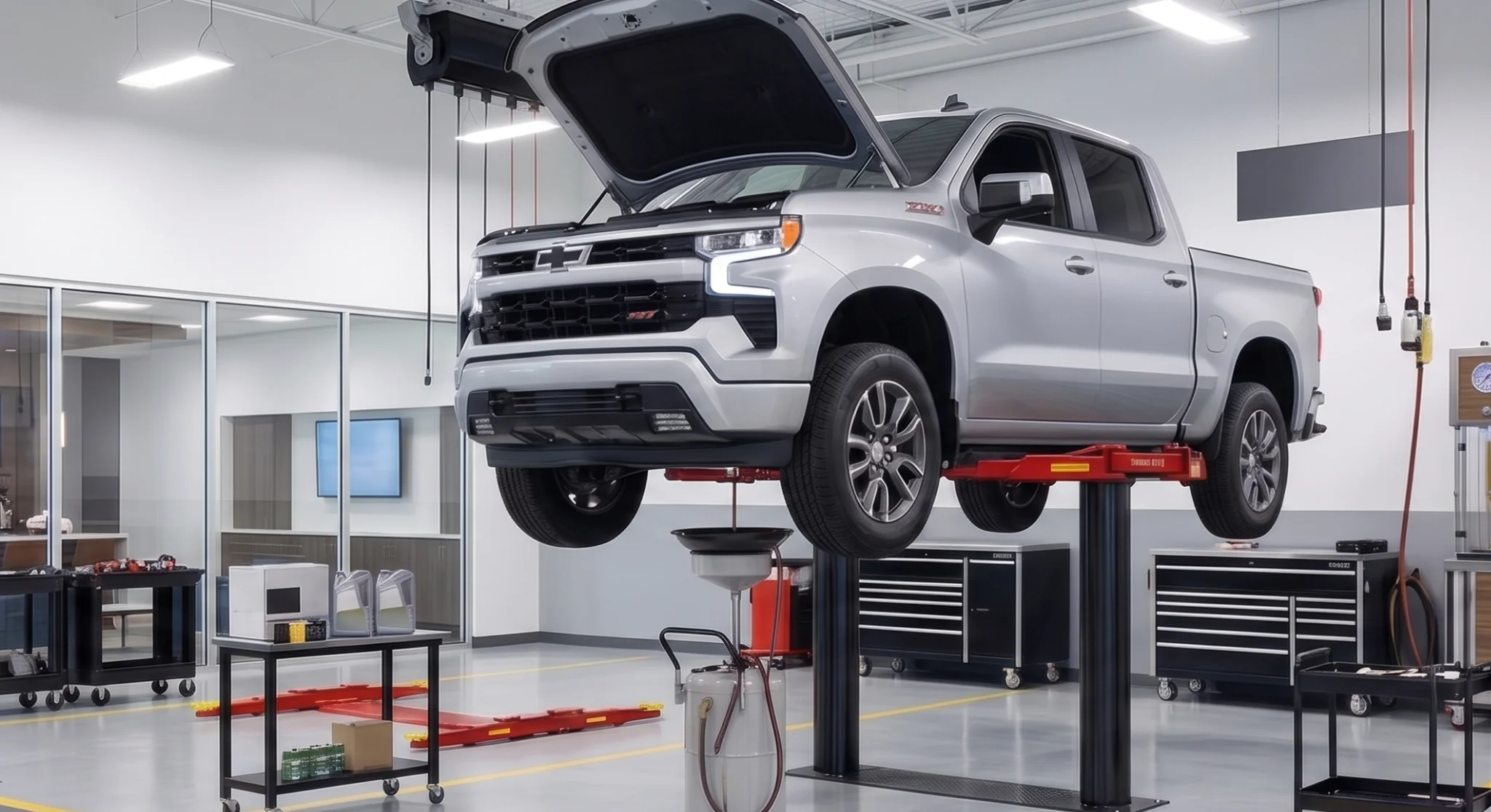
A certified oil change is far more comprehensive than draining and refilling fluid. At a certified service center, the process follows a defined sequence:
- Warm-engine drain — The vehicle is safely elevated and the spent oil is drained while warm, so suspended contaminants are fully evacuated.
- OEM filter replacement — The old filter is removed and replaced with an Original Equipment Manufacturer filter. Quality filters use synthetic-blend media that capture the fine particles (roughly 5–20 microns) responsible for most abrasive engine wear.
- Multi-point inspection — While the oil drains, a technician performs a comprehensive inspection.
- Refill and torque — A new drain-plug crush washer is installed, the drain plug is torqued to factory specification, and the crankcase is refilled with fresh certified oil.
- Oil-life reset — The engine’s oil-life monitoring system is reset.
What the Multi-Point Inspection Covers
- Fluid levels — coolant, brake fluid, windshield washer fluid, and power steering fluid
- Belt tension and hose integrity
- Tire wear patterns
This systematic check helps catch minor issues before they become major mechanical failures — valuable for anyone commuting daily on the Dallas North Tollway from Far North Dallas.
Warning Signs You Need an Oil Change Soon
Modern vehicles have oil-life monitoring systems, but drivers should stay alert to physical warning signs:
- Dashboard maintenance light — Calculates oil life from engine revolutions and operating temperatures.
- Dipstick color — Fresh oil is a translucent amber; old, depleted oil looks dark brown or black and may feel gritty.
- Increased engine noise — As oil loses viscosity, it can’t fully cushion moving metal parts, producing a ticking or knocking sound.
- Reduced estimated fuel economy — Degraded oil increases internal friction, forcing the engine to work harder.
EPA-estimated fuel economy figures are for comparison purposes only. Your actual mileage will vary depending on driving conditions, how you drive and maintain your vehicle, battery age/condition, and other factors.
Texas Driving Can Accelerate Oil Breakdown
Extreme summer heat, heavy stop-and-go traffic, and frequent short trips all qualify as severe driving conditions. Under these circumstances, oil breaks down faster than it would in steady highway driving — a real consideration for local commuters. If you notice any of these signs, schedule your service appointment online before minor wear becomes major.
Synthetic vs. Conventional Oil for Modern Engines
The choice between synthetic and conventional oil is dictated primarily by vehicle design. Most vehicles built in the last decade are designed for synthetic or synthetic-blend oil. Conventional oil, refined directly from crude, has irregular molecular structures that break down faster under heat. Full synthetic oil is chemically engineered with uniform molecules that resist thermal breakdown, prevent sludge, and hold viscosity under extreme conditions.
Those differences drive real cost and maintenance implications:
| Oil Type | Typical Change Interval | Cost & Protection |
|---|---|---|
| Conventional | 3,000–5,000 miles | Lowest upfront cost; shortest interval |
| Synthetic Blend | 5,000–7,500 miles | Balanced cost and durability |
| Full Synthetic | 7,500–10,000 miles (or up to 1 year) | Best protection; lowest cost per mile |
Because full synthetic supports longer intervals, its cost per mile is actually lower over the life of the vehicle. Even though a full synthetic change carries a higher upfront cost than a conventional change, spreading that cost across a much longer interval typically brings the cost per mile below that of conventional oil — with superior protection.
Meeting Chevrolet’s Oil Standards
Certified synthetic oil must meet rigorous industry standards, including the American Petroleum Institute (API) SQ specification, which guards against low-speed pre-ignition in turbocharged engines, and the current ILSAC GF-7 standard. For General Motors vehicles specifically, the oil must carry GM’s proprietary dexos1 Gen 3 certification for gasoline engines, or dexos D for light-duty Duramax diesels — engineered for modern seals, variable valve timing, and turbochargers.
How Certified Maintenance Protects Your Warranty
A regular schedule of certified oil changes is essential to protecting your factory warranty. Manufacturers require proof of proper maintenance using specified fluids and filters to honor warranty claims on engine components. A certified service center documents every oil change in your vehicle’s service history, preserving your powertrain protection. The difference between a protected claim and a denied one often comes down to documentation and the oil used:
| What Protects Your Coverage | What Puts Coverage at Risk |
|---|---|
| Documented oil changes in your service history | No records of regular oil changes |
| Manufacturer-specified fluids and filters | Sub-standard or off-spec oil |
| Service performed on schedule | Missed or overdue intervals |
This information is provided for general educational purposes only and does not constitute legal advice. Warranty coverage depends on the specific terms of your vehicle’s warranty agreement. Consult your owner’s manual or a qualified legal professional for guidance on your individual situation.
Credentials That Matter
When choosing where to service your vehicle, technician credentials are key. Two credentials signal a technician is qualified to work on your specific vehicle:
| Credential | What It Means |
|---|---|
| ASE-Certified (Automotive Service Excellence) | The technician has met rigorous industry standards for automotive repair and maintenance. |
| Factory-Trained | The technician is trained directly by the manufacturer on the exact engineering, oil capacities, and torque specifications for your model. |
Quick Answers About Certified Oil Changes
Can I switch back and forth between synthetic and conventional oil?
Yes. Modern engines can safely transition between synthetic and conventional oil without damaging seals or internal components. However, if your manufacturer specifies full synthetic, you should always use synthetic to maintain protection and warranty coverage.
How does oil consumption change on a high-mileage vehicle?
As an engine ages, clearances between piston rings and cylinder walls can widen and valve stem seals can degrade. This natural wear often leads to minor oil consumption between services, so high-mileage vehicles may need periodic top-offs even without visible leaks.
What happens if I accidentally overfill my engine oil?
Overfilling lets the crankshaft whip the excess into a frothy foam. Aerated oil can’t lubricate or cool properly, which can lead to oil starvation, elevated oil pressure, and potential damage to seals and the catalytic converter.
Why does the oil pressure light turn on even after a recent oil change?
An oil pressure light signals a critical drop in oil pressure — possible causes include a failing oil pump, a faulty pressure sensor, a severe leak, or aerated oil. If it illuminates, pull over safely and shut the engine off to prevent catastrophic damage.
Do I need to change the oil filter every time?
Yes. A used filter is already saturated with trapped debris. Leaving it in place lets dirty, unfiltered oil mix immediately with the fresh oil, reducing the efficiency and lifespan of the new lubricant.
Certified Oil Change Service in Addison and Far North Dallas
Keeping your vehicle on a strict maintenance schedule is the most effective way to protect its long-term reliability. At Galleria Chevrolet, our service center handles all your routine maintenance — from certified oil change service to comprehensive multi-point inspections — using top-tier lubricants and OEM parts. You’ll find us at 4747 Lyndon B Johnson Fwy, Dallas, TX 75244, convenient to Addison, University Park, and the surrounding Far North Dallas communities.
The information in this article is general guidance and does not constitute a specific diagnostic or repair recommendation for any individual vehicle. Repair and maintenance decisions should be made in consultation with a certified technician based on the specific condition of your vehicle.
The information on this page is provided for general informational purposes only and is subject to change. Vehicle maintenance recommendations, service intervals, and pricing may vary by model, condition, and configuration. Please consult your owner’s manual or contact our service department to confirm the specific requirements for your vehicle.

0 comment(s) so far on Certified Oil Change Service near Addison, TX