


Chevy EV Home Charging in Dallas: Range, Level 2 Setup, and Costs
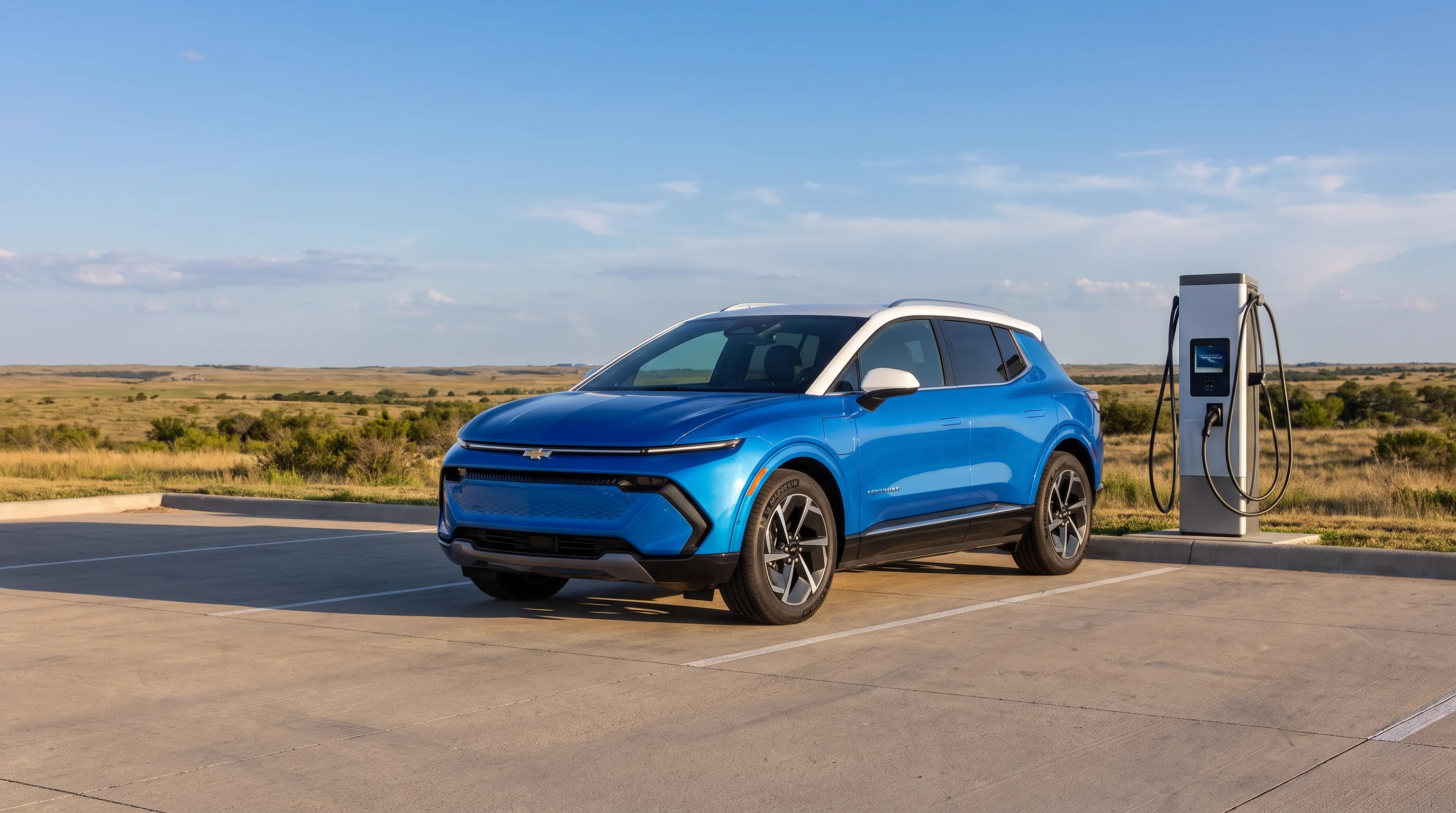
How far can a Chevrolet EV go on a full charge? Chevrolet’s current electric lineup ranges from an EPA-estimated 262 miles on the 2027 Chevrolet Bolt to an EPA-estimated 493 miles on the 2026 Silverado EV Work Truck Max Range. The 2026 Equinox EV delivers an EPA-estimated range of up to 319 miles with front-wheel drive and 307 miles with all-wheel drive from its 85-kWh battery.
EPA-estimated fuel economy figures are for comparison purposes only. Your actual mileage will vary depending on driving conditions, how you drive and maintain your vehicle, battery age/condition, and other factors.
| Model | EPA-Estimated Range | DC Fast-Charge Port | Shop |
|---|---|---|---|
| 2026 Chevrolet Equinox EV | Up to 319 mi (FWD) / 307 mi (AWD) | CCS1 (NACS adapter for Tesla Superchargers) | Equinox EV inventory |
| 2026 Chevrolet Blazer EV | Up to 312 mi (FWD) / 283 mi (AWD) / 303 mi (SS) | CCS1 (NACS adapter for Tesla Superchargers) | Blazer EV inventory |
| 2026 Chevrolet Silverado EV | Up to 493 mi (Work Truck Max Range) | CCS1 (NACS adapter for Tesla Superchargers) | Silverado EV inventory |
| 2027 Chevrolet Bolt | 262 mi | Native NACS | Bolt EV inventory |
Driving range varies with configuration, wheel size, payload, and driving habits. Larger wheels and dual-motor all-wheel drive lower the estimate; the all-wheel-drive Equinox EV, for example, is rated 12 miles below the front-wheel-drive version. Chevrolet’s One Pedal Driving and Regen on Demand help on every drive by turning the electric motor into a generator as you slow down, sending energy back into the battery.
Whether you commute along I-635 or plan a road trip across Texas, home charging keeps your Chevy EV ready to go. To see the lineup in person, visit our LBJ Freeway showroom or call our sales team at (972) 763-5444.
EPA-estimated fuel economy figures are for comparison purposes only. Your actual mileage will vary depending on driving conditions, how you drive and maintain your vehicle, battery age/condition, and other factors.
How fast does a Chevy EV charge on a Level 2 home charger?
With its 11.5-kW onboard charger connected to a 48-amp Level 2 station, the Equinox EV adds an estimated up to 36 miles of range per hour of charging. That’s enough to fully recharge its 85-kWh battery overnight.
Most daily commutes use only a fraction of a full charge, so routine home charging is usually a top-off rather than a full recharge. Follow the charge-limit guidance for your specific vehicle. The 2027 Bolt’s lithium iron phosphate (LFP) battery, for example, is designed to be charged to 100 percent regularly.
Your charging speed depends on both the wall unit’s amperage and the vehicle’s onboard charger. A Level 2 unit on a 40-amp circuit delivers 32 amps, about 7.7 kW, which adds an estimated 25 miles of range per hour to an Equinox EV. A 48-amp station on a 60-amp circuit unlocks the full 11.5 kW the Equinox EV’s standard onboard charger can accept.
You can manage home charging from the myChevrolet mobile app, and the Equinox EV’s departure-time setting helps make sure the battery is ready before you leave.
EPA-estimated fuel economy figures are for comparison purposes only. Your actual mileage will vary depending on driving conditions, how you drive and maintain your vehicle, battery age/condition, and other factors.
What outlet or circuit does a Level 2 home charger need?
A Level 2 home charger needs a dedicated 240-volt circuit. You can connect it two ways: plug it into a NEMA 14-50 outlet or hardwire it directly into your home’s electrical system.
A standard 120-volt household outlet can’t support Level 2 charging. Because an EV charger draws a heavy, continuous load for hours at a time, the circuit must be sized at 125 percent of the charger’s rated current. A plug-in charger on a NEMA 14-50 outlet, the same outlet type used for many electric ranges, runs on a 50-amp breaker and supplies up to 40 amps, or about 9.6 kW.
For the fastest home charging, many owners choose a hardwired installation. A hardwired 48-amp charger on a 60-amp circuit delivers 11.5 kW, matching the Equinox EV’s onboard charger, and avoids the wear and heat that can build up at a plug-in outlet over years of nightly use.
Before installation, have a licensed electrician perform a load calculation on your electrical panel. Many homes with 200-amp service can add a dedicated 50- or 60-amp EV circuit, but only a load calculation confirms it. Adding a new circuit or hardwiring a charger requires a licensed electrician, and many cities require a permit.
What is the difference between Level 1, Level 2, and DC fast charging?
Level 1 charging uses a standard 120-volt outlet and adds only a few miles of range per hour. Level 2 uses a dedicated 240-volt circuit and is the everyday home solution. DC fast charging bypasses the onboard charger at public stations; the Equinox EV accepts up to 150 kW and can add an estimated up to 77 miles of range in 10 minutes.
| Charging Level | Power Source | Voltage / Current | Estimated Range Added | Best For |
|---|---|---|---|---|
| Level 1 | Standard household outlet | 120V AC / 12A (about 1.4 kW) | 3–4 miles per hour | Backup or low-mileage days |
| Level 2 | Dedicated 240V circuit | 240V AC / 32A–48A | Up to 36 miles per hour (Equinox EV) | Overnight home charging |
| DC Fast Charging | Public fast-charging station | Direct current, up to 150 kW peak | Up to 77 miles in 10 minutes (Equinox EV) | Road trips and highway travel |
The Equinox EV includes a dual-level charge cord for both 120-volt and 240-volt outlets, and the 2027 Bolt includes a portable charger that works at either voltage.
On the road, the 2024–2026 Equinox EV, Blazer EV, and Silverado EV use a CCS1 charging port. To charge at a Tesla Supercharger, they need GM’s approved NACS DC adapter, which owners order through the myChevrolet app. The 2027 Bolt is Chevrolet’s first EV with a native NACS port, so it plugs into compatible Superchargers without an adapter.
EPA-estimated fuel economy figures are for comparison purposes only. Your actual mileage will vary depending on driving conditions, how you drive and maintain your vehicle, battery age/condition, and other factors.
How does Texas summer heat affect Chevy EV range?
Hot weather and air conditioning both reduce EV range. Battery-data firm Recurrent’s 2024 study of 7,500 electric vehicles found an average range loss of about 15 percent at 95°F, climbing to about 31 percent at 100°F, as the A/C works harder to cool a hot cabin. On a Dallas summer day, how you manage the A/C matters.
Your Chevy EV’s thermal management system works to keep the battery within a safe operating range in triple-digit heat, and that cooling uses some battery energy. Because an EV’s air conditioning runs on the high-voltage battery rather than an engine-driven belt, the biggest draw comes during the initial cool-down: Recurrent measured 3 to 5 kW to cool a hot cabin, versus about 1 kW to hold the temperature. Commuters heading home from University Park on the Dallas North Tollway on a summer afternoon will notice it most in the first few minutes.
To protect your range on hot days:
Pre-Cool While Plugged In
With the vehicle connected, it can draw energy from the charger instead of the battery.
Park in the Shade
Park in the shade or in a garage to reduce heat buildup inside the cabin.
Hold a Steady Temperature
Set the automatic climate control to a comfortable setting instead of running maximum cooling.
Use Ventilated Seats
If equipped, ventilated seats keep you comfortable with less A/C demand.
EPA-estimated fuel economy figures are for comparison purposes only. Your actual mileage will vary depending on driving conditions, how you drive and maintain your vehicle, battery age/condition, and other factors.
What does it cost to charge a Chevy EV at home in the Oncor service area?
Texas has a deregulated electricity market. You choose a retail electric provider, and Oncor delivers the power in the Dallas area. Your total rate combines the provider’s energy charge with Oncor’s delivery charges. As of August 2026, the median all-in residential rate in the Oncor/Dallas service area was about 15.9 cents per kilowatt-hour at 1,000 kWh of monthly use.
Source: ElectricRates.org, “Energy Cost in Texas: What You’re Actually Paying in 2026”
At that rate, the energy to fill an 85-kWh battery from empty costs roughly $13.50, before charging losses. For a 30-mile daily commute, assuming an estimated 8.5 kWh of energy use, home charging costs roughly $1.35 per day, or about $41 per month. Your actual cost depends on your plan, your usage, and your vehicle.
Many Texas providers offer time-of-use or “free nights” plans with discounted or free overnight energy, which can pair well with scheduled EV charging. The hours vary by plan, so check the plan’s Electricity Facts Label before you sign up.
EPA-estimated fuel economy figures are for comparison purposes only. Your actual mileage will vary depending on driving conditions, how you drive and maintain your vehicle, battery age/condition, and other factors.
Common Questions About Chevrolet EV Ownership
Can Chevrolet electric vehicles use Tesla Superchargers in North Dallas?
Yes, with the right equipment. The 2024–2026 Equinox EV, Blazer EV, and Silverado EV charge at compatible Tesla Superchargers using GM’s approved NACS DC adapter, available through the myChevrolet app, where owners can also find a charger, start a session, and pay. GM doesn’t guarantee access to every Supercharger, and the adapter works only with DC fast chargers. The 2027 Bolt has a native NACS port and needs no adapter.
What is the battery warranty on a new Chevrolet electric vehicle?
Chevrolet covers certain electric propulsion components on its electric vehicles, including the high-voltage battery, for 8 years or 100,000 miles, whichever comes first. See the Chevrolet Limited Warranty booklet for your vehicle for full coverage terms.
This information is provided for general educational purposes only and does not constitute legal advice. Warranty coverage depends on the specific terms of your vehicle’s warranty agreement. Consult your owner’s manual or a qualified legal professional for guidance on your individual situation.
How does One Pedal Driving help extend range in daily traffic?
When One Pedal Driving is turned on, the position of the accelerator pedal controls whether the vehicle accelerates, coasts, slows down, or comes to a complete stop. As the vehicle slows, the electric motor acts as a generator and sends energy back into the battery, which helps in stop-and-go traffic.
Can I pre-cool the cabin without draining the battery before I drive?
Yes. When your Chevy EV is plugged into a home charger, it can draw energy from the charger instead of the battery, so pre-cooling the cabin before you leave helps preserve your driving range.
Our team at Galleria Chevrolet is here to help make your move to electric driving straightforward. Whether you’re comparing range across the lineup or planning your home charging setup, visit our Dallas dealership at 4747 Lyndon B Johnson Fwy, Dallas, TX 75244, or call our sales team at (972) 763-5444 to schedule a test drive.
Sources
- Recurrent, summer and hot-weather EV range study (2024), as reported by InsideEVs: insideevs.com
- Oncor/Dallas median all-in residential electricity rate, August 2026: ElectricRates.org, “Energy Cost in Texas: What You’re Actually Paying in 2026”
- Chevrolet EV warranty coverage: Chevrolet EV Ownership FAQs
Disclaimers
EPA-estimated fuel economy figures are for comparison purposes only. Your actual mileage will vary depending on driving conditions, how you drive and maintain your vehicle, battery age/condition, and other factors.
This information is provided for general educational purposes only and does not constitute legal advice. Warranty coverage depends on the specific terms of your vehicle’s warranty agreement. Consult your owner’s manual or a qualified legal professional for guidance on your individual situation.

0 comment(s) so far on Chevy EV Home Charging in Dallas: Range, Level 2 Setup, and Costs